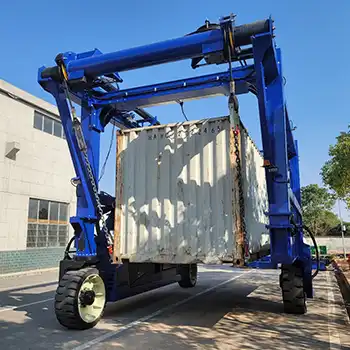
Straddle Carrier Chain Type – Container Yard Handling Equipment
Chain type straddle carrier for container and heavy cargo handling. Ideal for yard transport, lifting, stacking, and industrial material movement.
| Crane Type | Chain Type Straddle Carriers |
| Crane Capacity | 30 Ton to 60 Ton |
| Span Length | Customized |
| Lifting Height | Customized |
| Coverage Area Type | Square / Rectangular, Linear travel / Rotation 360 Steering |
| Application | Chain type straddle carriers are widely used for container handling, heavy cargo transport, steel plants, shipyards, construction sites, and ESS/BESS projects, suitable for moving containers, steel coils, precast beams, wind components, transformers, and |
| Certifications | CE / ISO / SGS / Other third-party inspection |
| Customization | Customized material handling cranes solutions available for indoor, outdoor, hazardous, corrosive, c |
Category: Straddle Carrier
Tags: straddlecrane
Your Trusted Stradle Carrier Crane Manufacturer & Supplier
Straddle Carrier (Chain Type) – Standard Model
Container & Heavy Cargo Yard Handling Equipment
Chain-Type Straddle Carrier – Overview
Container and Heavy Cargo Handling Equipment for Yard Operations
Overview
Chain-type straddle carrier is a type of material handling equipment used for moving and stacking containers and heavy cargo in industrial yards. It runs on rubber tyres and uses a chain lifting system to raise and lower loads in a controlled way. In daily operations, it is commonly seen in container yards, warehouses, and industrial storage areas where flexible movement is needed.
This equipment is not limited to fixed rail systems. It can move freely across open yard space, which makes it suitable for sites with changing layouts or mixed cargo flow. Operators often choose it when they need one machine to handle lifting, transport, and stacking in a single workflow.
Indoor and Outdoor Yard Operation Use
The chain-type straddle carrier is designed for both indoor and outdoor working environments. It can operate on flat concrete ground and does not require complex foundation structures. In many industrial projects, it is used in covered warehouses as well as open storage yards.
It performs well in areas where cargo needs to be moved between storage stacks and loading zones. The flexibility of movement helps reduce waiting time between handling steps. In simple terms, it supports continuous yard operation without strict movement limitations.
Stable Operation and Efficient Yard Logistics
Stability is one of the key requirements in daily yard handling. The chain-type lifting system helps reduce sudden load movement during lifting and lowering. This makes positioning more controlled when placing cargo in storage stacks or onto transport vehicles.
At the same time, the equipment supports smoother yard logistics. One machine can complete multiple tasks such as lifting, transporting, and stacking within the same working area. This reduces the need for additional handling equipment in the yard.
- Suitable for container yards, warehouses, and industrial storage sites
- Works in indoor and outdoor environments on flat ground
- Handles medium to heavy loads including containers and steel products
- Chain lifting system supports stable vertical movement
- Flexible movement without fixed rail installation
- Supports combined lifting, transport, and stacking operations
Chain-Type Straddle Carrier – Standard Low-Volume Model Specification
This chain-type straddle carrier is designed for low-volume but stable yard operations, mainly used for loading and unloading containers and general industrial cargo between trailers and ground storage areas. In practical use, it is often selected for sites where handling frequency is moderate, but load stability and simple operation are still important.
Overview of Application
The machine focuses on straightforward container movement, especially in short-distance transfer work inside yards, warehouses, and logistics terminals. It is commonly used for 20ft and 40ft container handling, as well as general heavy cargo that requires controlled lifting from trailer to ground.
Technical Specifications -Quick Reference
| Parameter | Specification | Notes |
|---|---|---|
| Application Type | Low-volume standard chain straddle carrier | Designed for trailer-to-ground loading/unloading |
| Rated Capacity | 35,000 kg | Suitable for containers and general heavy cargo |
| Lifting System | Chain-type hoisting mechanism | Provides stable vertical lifting with controlled movement |
| Overall Height | 5165 mm | Designed for standard yard clearance conditions |
| Overall Width | 4920 mm | Supports stable movement and load balance |
| Loading Area Width | 3000 mm | Suitable for standard container handling width |
| Loading Area Height | 4600 mm | Designed for trailer clearance and lifting operation |
Practical Working Notes
In industrial operation, this type of chain straddle carrier is mainly used for direct transfer work between transport vehicles and ground storage areas. It is not designed for extremely high-speed port operations, but rather for steady and repeatable yard handling.
- Suitable for trailer to ground container transfer
- Works with standard container sizes and general cargo loads
- Chain lifting system helps maintain stable vertical movement during loading and unloading
- Designed for controlled, low-frequency industrial operations
- Best used in yards where layout is simple and operation flow is stable
The configuration is focused on reliability and ease of operation. In daily use, operators usually prioritize smooth lifting, safe placement, and consistent movement rather than high-speed cycle performance.
Chain-Type Straddle Carrier – Key Features & Structural Design
Chain-type straddle carrier is designed with a focus on practical yard operation needs. In industrial industrial use, the main value comes from how stable it lifts, how easily it moves, and how simply it can be operated on a daily basis. Each feature and structural element is built to support continuous handling work in container yards, warehouses, and industrial storage areas.
Key Functional Features
Below are the key functional features of the equipment:
- Chain lifting system for stable vertical load handling
- Rubber-tyred mobility for flexible yard movement
- High maneuverability in narrow or confined spaces
- Suitable for multi-layer stacking operations
- Operator-friendly control system
- Designed for continuous industrial use
These features work together to support smooth cargo flow in daily operations. The machine is not only about lifting capacity, but also about how easily it fits into industrial yard conditions where space, timing, and safety all matter at the same time.
In practical use, this combination of functions helps reduce handling delays and keeps the yard operation more organized. It allows one machine to cover lifting, moving, and stacking tasks without switching between multiple equipment types.
Structural Design Overview
The structural design of a straddle carrier is focused on strength, stability, and long-term use in demanding yard conditions. In industrial industrial environments, the machine is often exposed to continuous loading, uneven cargo distribution, dust, and outdoor weather. Because of this, the frame and supporting structure must be built to handle repeated stress without deformation or failure.
Below is a clear breakdown of the main structural elements:
- Heavy-duty steel frame construction
- Reinforced load-bearing chassis
- Anti-deformation structural design for long-term use
- Modular maintenance-friendly layout
- Weather-resistant protection for outdoor operation
These structural elements work together to ensure the equipment can operate safely under daily industrial workloads. The steel frame carries the main lifting stress, while the reinforced chassis helps distribute load evenly during movement and lifting operations.
In practical yard use, durability is not only about strength, but also about how the structure performs after long hours of continuous operation. The modular layout allows easier inspection and part replacement, which helps reduce downtime during maintenance. At the same time, weather-resistant treatment supports stable operation in outdoor environments where moisture, dust, and temperature changes are common.
Chain-Type Straddle Carrier – Overview
Container and heavy cargo handling equipment used in industrial yards, warehouses, and logistics terminals for lifting, transporting, and stacking operations.
Overview of Chain-Type Straddle Carrier
Chain-type straddle carrier is a type of material handling equipment used for moving and stacking containers and heavy cargo in industrial yards. It runs on rubber tyres and uses a chain lifting system to raise and lower loads in a controlled way. In daily operations, it is commonly seen in container yards, warehouses, and industrial storage areas where flexible movement is needed.
This equipment is not limited to fixed rail systems. It can move freely across open yard space, which makes it suitable for sites with changing layouts or mixed cargo flow. Operators often choose it when they need one machine to handle lifting, transport, and stacking in a single workflow.
Indoor and Outdoor Yard Operation Use
The chain-type straddle carrier is designed for both indoor and outdoor working environments. It can operate on flat concrete ground and does not require complex foundation structures. In many industrial projects, it is used in covered warehouses as well as open storage yards.
It performs well in areas where cargo needs to be moved between storage stacks and loading zones. The flexibility of movement helps reduce waiting time between handling steps. In simple terms, it supports continuous yard operation without strict movement limitations.
Stable Operation and Efficient Yard Logistics
Stability is one of the key requirements in daily yard handling. The chain-type lifting system helps reduce sudden load movement during lifting and lowering. This makes positioning more controlled when placing cargo in storage stacks or onto transport vehicles.
At the same time, the equipment supports smoother yard logistics. One machine can complete multiple tasks such as lifting, transporting, and stacking within the same working area. This reduces the need for additional handling equipment in the yard.
- Suitable for container yards, warehouses, and industrial storage sites
- Works in indoor and outdoor environments on flat ground
- Handles medium to heavy loads including containers and steel products
- Chain lifting system supports stable vertical movement
- Flexible movement without fixed rail installation
- Supports combined lifting, transport, and stacking operations
Chain-Type Straddle Carrier – Standard Low-Volume Model Specification
Designed for low-volume but stable yard operations, mainly for trailer-to-ground loading, unloading, and short-distance container handling.
Application Overview
This chain-type straddle carrier is designed for low-volume but stable yard operations, mainly used for loading and unloading containers and general industrial cargo between trailers and ground storage areas. In practical use, it is often selected for sites where handling frequency is moderate, but load stability and simple operation are still important.
The machine focuses on straightforward container movement, especially in short-distance transfer work inside yards, warehouses, and logistics terminals. It is commonly used for 20ft and 40ft container handling, as well as general heavy cargo that requires controlled lifting from trailer to ground.
Technical Specifications (Quick Reference)
| Parameter | Specification | Notes |
|---|---|---|
| Application Type | Low-volume standard chain straddle carrier | Designed for trailer-to-ground loading/unloading |
| Rated Capacity | 35,000 kg | Suitable for containers and general heavy cargo |
| Lifting System | Chain-type hoisting mechanism | Provides stable vertical lifting with controlled movement |
| Overall Height | 5165 mm | Designed for standard yard clearance conditions |
| Overall Width | 4920 mm | Supports stable movement and load balance |
| Loading Area Width | 3000 mm | Suitable for standard container handling width |
| Loading Area Height | 4600 mm | Designed for trailer clearance and lifting operation |
Practical Working Notes
In industrial operation, this type of chain straddle carrier is mainly used for direct transfer work between transport vehicles and ground storage areas. It is not designed for extremely high-speed port operations, but rather for steady and repeatable yard handling.
- Suitable for trailer to ground container transfer
- Works with standard container sizes and general cargo loads
- Chain lifting system helps maintain stable vertical movement during loading and unloading
- Designed for controlled, low-frequency industrial operations
- Best used in yards where layout is simple and operation flow is stable
Chain-Type Straddle Carrier – Key Features & Structure
Practical features and structural design focused on stable lifting, flexible movement, and long-term industrial use.
Key Features
Chain-type straddle carrier is designed with a focus on practical yard operation needs. In industrial industrial use, the main value comes from how stable it lifts, how easily it moves, and how simply it can be operated on a daily basis. Each feature is built to support continuous handling work in container yards, warehouses, and industrial storage areas.
- Chain lifting system for stable vertical load handling
- Rubber-tyred mobility for flexible yard movement
- High maneuverability in narrow or confined spaces
- Suitable for multi-layer stacking operations
- Operator-friendly control system
- Designed for continuous industrial use
In practical use, this combination helps reduce handling delays and keeps yard operations more organized.
Structural Design
The structural design of a straddle carrier is focused on strength, stability, and long-term use in demanding yard conditions. It is built to handle continuous loading, uneven cargo distribution, and outdoor environments.
- Heavy-duty steel frame construction
- Reinforced load-bearing chassis
- Anti-deformation structural design for long-term use
- Modular maintenance-friendly layout
- Weather-resistant protection for outdoor operation
These elements ensure stable operation under long working hours and reduce downtime during maintenance.
Chain-Type Straddle Carrier – Operating Capabilities
Typical yard handling functions including container transfer, industrial cargo handling, warehouse use, and flexible stacking operations.
Container Handling and Trailer Transfer
Chain-type straddle carriers are commonly used for standard container handling between trailers and ground storage areas. This is the most frequent operation in daily yard work.
- 20ft and 40ft standard container handling
- Trailer to ground unloading and loading
- Short-distance container movement inside yard
- Handling of selected special containers when configured
Heavy Industrial Cargo Handling
Besides containers, the machine is also used for general heavy cargo such as steel products, precast concrete, and machinery parts.
- Steel coils and steel plates
- Precast concrete blocks
- Machinery parts and packaged equipment
- Heavy industrial materials in storage yards
Warehouse and Yard Operations
- Indoor or outdoor warehouse yard handling
- Material transfer between storage zones
- Loading and unloading support for trucks
- Organized stacking and re-stacking work
Flexible Stacking and Workflow Use
- Flexible stacking of containers and materials
- Short-distance transport inside yard
- Continuous but controlled lifting cycles
- Works well in fixed or semi-fixed yard layouts
Application
Chain-type straddle carrier is used in different industrial sites where heavy cargo needs to be moved, stored, and stacked in a controlled way. In industrial projects, the equipment is selected based on yard layout, material type, and daily handling volume. It is commonly found in both logistics-focused and production-based environments.
Below are the typical application areas:
- Container yards and logistics terminals
- Industrial warehouses
- Steel manufacturing and distribution plants
- Construction material storage yards
- Port auxiliary handling operations
- Precast concrete storage and transport areas
In container yards and logistics terminals, it is mainly used for moving containers between storage stacks and transport vehicles. The operation is usually continuous, with frequent lifting and repositioning throughout the day.
In industrial warehouses, it helps manage heavy goods that cannot be handled by standard forklifts. It is often used when storage height and load weight exceed normal handling equipment capacity.
In steel plants and distribution centers, it is used for handling steel coils, plates, and bundled materials. These loads require stable lifting and careful placement during stacking and loading.
Construction material yards and precast concrete areas also rely on this type of equipment. Large and heavy concrete elements need controlled movement to avoid damage during handling.
In port support operations, it is used as auxiliary equipment to support container flow and reduce congestion in main handling zones. The flexibility of movement allows it to work in different zones of the yard without fixed infrastructure.
Buyer Selection Considerations on Chain-Type Straddle Carrier
Key factors to evaluate when selecting a chain-type straddle carrier based on industrial yard operation, load demand, and working environment conditions.
Load Requirement and Peak Working Load
For chain-type straddle carriers, load selection is closely linked to lifting stability. The chain system performs best when working within its designed load range.
- Confirm maximum cargo or container weight
- Pay attention to peak lifting moments, not only average load
- Ensure chain system is rated for industrial working conditions
- Keep safety margin for long-term operation
Yard Layout and Movement Space
Chain-type units are often used in yards where flexible movement is needed. Even with stable lifting, the machine still requires proper working space.
- Check aisle width for safe movement
- Ensure turning space for multi-direction steering
- Plan clear routes between stacking and loading areas
- Avoid tight corners that limit maneuvering
Indoor or Outdoor Operation
The chain lifting system is stable, but the overall machine still depends on working environment conditions.
- Outdoor use requires dust, rain, and corrosion protection
- Indoor use benefits from cleaner and more controlled conditions
- Temperature changes may affect long-term performance
- Choose protection level based on site exposure
Ground Strength and Load Distribution
Chain-type straddle carriers carry heavy loads, so ground condition is important for stability during lifting.
- Check concrete strength of yard surface
- Ensure ground can handle loaded wheel pressure
- Avoid soft or uneven areas during operation
- Reinforce floor if heavy stacking is frequent
Stacking Height and Chain Lifting Stability
The chain system is designed for controlled vertical movement, especially during stacking.
- Confirm required stacking layers (1–3 layers typical)
- Check lifting height vs. load stability
- Ensure smooth vertical movement without shock loading
- Match stacking height with yard space usage
Daily Operation Frequency
Chain-type systems are suitable for repeated lifting cycles, but duty level still matters.
- Define light, medium, or heavy-duty operation
- Continuous lifting requires stronger chain and drive system
- Consider heat and wear during long shifts
- Match design with daily workload intensity
Power System and Operating Cost
Power choice affects both performance and long-term running cost.
- Diesel for outdoor flexibility and heavy-duty use
- Electric for lower operating cost and indoor work
- Hybrid for mixed working environments
- Ensure stable power supply in the yard
Maintenance and Chain System Serviceability
Chain-type systems require regular inspection, so maintenance design is important.
- Check chain inspection and lubrication access
- Ensure easy replacement of wear parts
- Confirm availability of spare chains and components
- Prefer simple maintenance layout for daily checks
Advantages of Chain-Type System
The chain-type lifting system is widely used in straddle carrier equipment because it offers a simple and stable way to handle vertical lifting. In industrial yard operations, the main focus is not only lifting capacity, but also how smoothly and safely the load moves during repeated daily cycles. The chain system is designed to support this type of controlled operation in practical working environments.
Compared with more complex lifting systems, the chain-type structure is easier to manage and maintain, especially in container yards and industrial storage areas where equipment runs for long hours. It performs best in applications that require steady lifting and accurate positioning during stacking.
Below are the main advantages of the chain-type system:
- Stable vertical lifting under heavy loads
- Reduced swing during lifting operations
- Better performance in controlled stacking environments
- Lower maintenance compared to complex hydraulic systems
- Suitable for precise container placement
These advantages make the chain system suitable for yards where stability and repeatable performance are more important than high-speed or highly complex motion control. In daily use, operators benefit from smoother load handling and more predictable lifting behavior, especially when placing containers or heavy materials in tight stacking positions.
Optional Configurations
Chain-type straddle carriers are often customized based on different yard layouts, cargo types, and working conditions. In industrial projects, these optional configurations help match the equipment more closely with the actual operation needs, instead of using a fixed standard setup.
Below are the commonly available optional configurations:
- Different lifting capacities (customizable)
- Adjustable stacking height systems
- Cabin or remote control operation
- Anti-collision and safety monitoring systems
- Temperature or weather protection packages
- Specialized spreader or lifting attachments
These options allow the machine to be adapted for different industrial environments. For example, higher lifting capacity is used in heavy cargo yards, while adjustable stacking systems help when storage height requirements change over time.
In daily operation, control systems such as cabin or remote operation can improve operator convenience and safety, especially in busy yard conditions. At the same time, safety systems like anti-collision monitoring help reduce operational risks when multiple machines or vehicles are working in the same area.
Weather protection and environmental packages are often used in outdoor yards where dust, rain, or temperature changes can affect performance. Special lifting attachments are also available when handling non-standard cargo, such as irregular steel products or special containers.
Safety Features
Safety is an important part of chain-type straddle carrier design, especially because the equipment works with heavy loads in busy yard environments. In daily operation, the system is built to reduce risk during lifting, moving, and stacking. It also helps operators keep better control during continuous work.
Below are the main safety features used in this type of equipment:
- Overload protection system
- Emergency stop functions
- Anti-slip tire design
- Load stability monitoring
- Operator cabin safety structure
- Warning alarms and visual indicators
These safety functions work together during industrial operation. The overload protection system helps prevent lifting beyond rated capacity, while the emergency stop allows immediate shutdown when unexpected situations occur.
In practical yard conditions, tire design and load stability monitoring are important when moving on uneven or crowded surfaces. They help maintain balance during travel and lifting, especially when handling heavy containers or steel materials.
The operator cabin is designed with basic protection structure to support safe working conditions. At the same time, warning alarms and visual signals help communicate machine status clearly, especially in busy environments where multiple machines may operate in the same area.
Maintenance & Service of Chain-Type Straddle Carrier
Practical maintenance approach focused on simple routine inspection, modular repair, and long-term stable operation in yard environments.
Easy-Access Maintenance Points
Maintenance design is focused on making daily checks easier. Key parts are arranged so workers do not need to spend too much time opening covers or disassembling structures.
- Chain system can be checked from accessible positions
- Main lifting points are arranged for quick inspection
- Electrical and control parts are placed in service-friendly areas
- Routine checks can be done without long downtime
In many yards, technicians perform quick walk-around inspections as part of daily operation.
Modular Component Replacement
One important advantage of chain-type systems is modular repair design. Instead of stopping the whole machine, only the worn or damaged part is replaced.
- Worn chain sections can be replaced individually
- Electrical parts are separated into service units
- Drive components can be removed without full dismantling
- Reduces downtime during repair work
This approach helps keep the machine available for operation with minimal interruption.
Regular Inspection Schedule
Inspection is based on working hours and operational intensity. The goal is consistency rather than complexity.
- Daily quick check before operation
- Weekly inspection of lifting and moving systems
- Monthly check of structural connections and bolts
- Regular review of safety functions and alarms
Routine inspection helps prevent unexpected failures in continuous yard operation.
Chain System Lubrication and Care
The chain system is the core of lifting operation, so lubrication plays a key role in long-term performance.
- Regular lubrication of chain links and moving joints
- Use recommended industrial-grade lubricants
- Avoid dry operation under heavy lifting conditions
- Check chain tension during maintenance rounds
Proper lubrication helps reduce wear and ensures smoother lifting performance during continuous use.
Tire and Structural Wear Monitoring
Since the machine operates under heavy loads and continuous movement, tires and structural components require regular attention.
- Check tire wear and pressure regularly
- Inspect wheel alignment for smooth movement
- Look for cracks or stress marks on steel structure
- Monitor deformation in high-load areas
Early detection of wear helps maintain safe and stable yard operation.
FAQs of Chain-Type Straddle Carrier
In industrial buying decisions, questions usually come up around capacity, working conditions, and long-term operation. These are practical concerns from yard managers and engineers, not just product curiosity. Below are the most common questions related to chain-type straddle carriers, with clear and direct answers.
What container sizes can it handle?
Chain-type straddle carriers are mainly used for standard container sizes. In most yard applications, they handle 20ft and 40ft containers, and in some cases, special or non-standard containers depending on the spreader configuration.
- 20ft standard containers
- 40ft standard containers
- Some special or customized container types
- Non-container cargo with suitable lifting attachments
In practical use, the key point is matching the lifting setup with the container type used in your yard.
What is the maximum lifting capacity?
The lifting capacity depends on the model configuration and project requirement. Most chain-type straddle carriers are designed for medium to heavy-duty lifting work.
- Typical range: 20 to 60 tons
- Can be customized based on project needs
- Capacity should include safety margin for peak loads
- Always confirm industrial working load, not only average load
Can it operate indoors and outdoors?
Yes, it is designed for both indoor and outdoor use. However, working conditions will affect the configuration and protection level.
- Indoor use: cleaner operation, limited space handling
- Outdoor use: requires dust, rain, and corrosion protection
- Suitable for warehouses, yards, and logistics terminals
- Ground condition must be checked in both cases
Is customization available for different yard layouts?
Yes, customization is commonly used in industrial projects because no two yards are the same.
- Adjusted span and structure size
- Different steering and turning configurations
- Customized lifting height and stacking levels
- Layout-based design for narrow or wide yards
In practice, yard layout often decides the final machine design.
What power options are available?
Power selection depends on site conditions, energy cost, and working environment.
- Diesel for outdoor and flexible operation
- Electric for indoor or cost-sensitive operation
- Hybrid systems for mixed working environments
- Choice depends on local energy availability
What is the maintenance requirement?
Maintenance is straightforward but must be regular. Most work is based on inspection and basic servicing.
- Daily visual inspection before operation
- Regular lubrication of chain and moving parts
- Periodic check of tires and structure
- Scheduled replacement of wear parts
In simple terms, regular small checks are more important than heavy repairs.
Can it handle oversized or irregular cargo?
Yes, but it depends on the lifting attachment and configuration used. Chain-type systems are stable, but proper tooling is important for safety.
- Can handle steel products and precast concrete
- Suitable lifting attachments required for irregular loads
- Load must be properly balanced before lifting
- Special spreaders can be customized for non-standard cargo
In industrial yard work, correct attachment selection is key for safe handling of non-standard cargo.
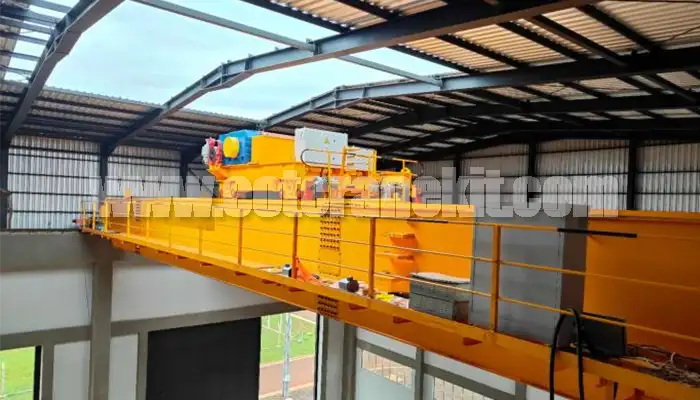
Latest project
150 Ton Overhead Crane Installation Feedback – Paraguay Case
QDX 150 ton overhead crane in action in Paraguay. Installation photos, video, and client feedback show performance, safety, and heavy-lifting efficiency.
Free consultation to Confirm Parameters & Specifications and Get
Latest Crane Price & Crane Rate.
- Types of overhead cranes : _______?
- Optional: Overhead travelling crane, goliath gantry crane,Slewing jib crane, Single girder or double girder crane,small portable crane or kbk crane, etc.
- Capacity of overhead crane: _______?
- Optional: 0.25ton, 0.5 ton, 1 ton, 2 ton, 3ton, 5 ton, 10 ton,15ton, 20ton, 25 ton, 30ton,35ton, up to 550ton, etc.
- Crane span & lifting height : _______?
- Crane travelling length : _____?
- Control of overhead crane:_______?
- Optional: pendant/ remote/cabin control
- Voltage supply of overhead crane:_____?
- Eg,: 380V50/60HZ,3Phase or others,etc.
- Application/usage of crane:_______?
- Eg,: Steel mill, ,injection mold, cement,stone, concrete,granite, general manufacturing, etc.
Just leave a message via the contact form and our hoist and crane engineer will contact you with in 24working hours.
Get In Touch